
The 15-year agreement will see Infosys develop a next-generation, data-driven workforce management platform to replace the existing electronic staff record (ESR) system, which annually manages a 55 billion payroll for 1.9 million NHS employees.

Samsung India Electronics has initiated job cuts in its Consumer Electronics (CE) division, laying off 8-10 mid-to-senior-level employees with plans to let go of another 40-50 staff. This move is part of a cost-rationalisation exercise driven by rising input costs, muted consumer demand, and intense competition from rival Korean and Chinese players.

HDFC Bank, India's largest private sector lender, reported a reduction of 3,343 employees in FY26, bringing its total workforce to 2,11,178, even as its balance sheet expanded by 12 per cent. The bank's MD and CEO, Sashidhar Jagdishan, attributed the headcount reduction to redeploying talent from back-end functions to customer-facing roles due to technology-led efficiencies. The annual report also addressed the challenging resignation of part-time chairman Atanu Chakraborty, which raised questions about the bank's governance standards.

IIT Madras has inaugurated a new state-of-the-art robotics laboratory, established with CSR support from Bechtel India. This collaboration aims to accelerate research, innovation, and industry applications in robotics and automation, specifically for the construction and infrastructure sectors, fostering advanced technological solutions and workforce development.

Salesforce executives, including South Asia CEO Arundhati Bhattacharya, predict a significant shift in India towards wider enterprise AI adoption, moving from experimentation to production deployments. The company plans to invest in physical infrastructure and talent upskilling in India. Salesforce's vision for the "agentic enterprise" involves a four-layer architecture, emphasising the need for robust security and governance for autonomous agents. Executives also highlighted the evolving nature of jobs, with AI handling repetitive tasks and creating new specialised roles, positioning India as a potential leader in agentic innovation by 2030.

Industry leaders at an AIMA panel discussion emphasised the need for businesses to quickly adapt to changing market conditions and invest in technologies like artificial intelligence to build resilience and achieve long-term growth. They highlighted the current era of uncertainty driven by geopolitical tensions, supply chain disruptions, and rapid regulatory changes, stressing that tactical responses are as crucial as long-term strategy.

A joint report by Dell Technologies and Zinnov reveals that despite high ambition, nearly 70% of India's Global Capability Centres (GCCs) are stuck at the pilot stage for AI adoption. Foundational gaps in data, infrastructure, and governance are identified as key bottlenecks preventing the scaling of AI initiatives into enterprise-wide production. The report highlights the need for significant reskilling of the workforce and robust foundations for industrialising AI responsibly.
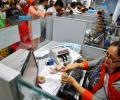
The finance ministry has announced that all banks, including Regional Rural Banks, will remain open on Sunday, September 27, 2026, to ensure public convenience amidst a proposed three-day strike by the United Forum of Bank Unions (UFBU) starting September 28, 2026. The strike, if it materialises, seeks a 5-day banking week and pension reforms.

A new report by ADP reveals that one in two Indian companies plan to adopt AI-powered payroll systems within the next 12 months, driven by the need for automation in workforce management, compliance, and compensation decisions. However, firms are increasingly cautious about data protection risks, especially with the implementation of the Digital Personal Data Protection (DPDP) Act, 2023.
A recent survey reveals that Artificial Intelligence is becoming a central focus in human resource management, with a majority of professionals identifying it as a top priority for improving efficiency, reducing costs, and optimising workforce planning across various HR functions.

Artificial intelligence (AI) is significantly increasing the demand for flexible office spaces in India, as enterprises prioritise agility, speed-to-market, and struggle with forecasting workforce requirements. AI-native startups are a primary driver, while established companies are adopting 'core-plus-flex' strategies to balance stability with adaptability.

The larger question raised by the associations is simple: If ISRO is no longer to manufacture launch vehicles, what will happen to the institution's accumulated capabilities and the people who built them?

Union Finance Minister Nirmala Sitharaman called upon 'Gen Z' and 'Gen Alpha' to assume leadership, prioritise the nation, and contribute to its growth, rather than questioning what the country has done for them.

Southern chief ministers fear population stabilisation could reduce their parliamentary representation and tax devolution benefits.

GIS intelligence solutions provider Mirai Aerospace Systems and Software Solutions has signed an MoU with US-based GreenValley International Inc to strengthen India's geospatial and LiDAR remote sensing manufacturing base. The collaboration focuses on local assembly, manufacturing, technical support, and the development of AI-driven LiDAR applications, aiming to meet India's growing demand across various sectors.

A new report reveals a significant shift in India's AI hiring landscape, moving from experimental roles to those focused on deployment, integration, and scaling of AI solutions. Employers, including GCCs, IT services, and enterprises, are increasingly seeking professionals who can implement AI across core business operations, leading to a demand for core AI roles that currently outstrips the available supply.

Nagaland Governor Nand Kishore Yadav has advocated for increased use of technology, especially drones and geospatial systems, to enhance governance and create employment opportunities for the state's youth. During his visit to the Nagaland GIS and Remote Sensing Centre and Drone Centre of Excellence, he highlighted the broad applications of drone technology and the importance of skill development. The centre is actively training youth in various drone-related courses, aiming to meet the demand for drone pilots in the Northeast.

India's manufacturing sector growth decelerated to a five-year low of 52.8 in August, down from 53.5 in July, as output and new orders moderated due to softer demand conditions, according to the HSBC India Manufacturing Purchasing Managers' Index (PMI).

'It requires new skilling, new ways of working, and new structures. That's the reality.'
TeamLease EdTech Founder and CEO Shantanu Rooj states that the AI-driven world transition is irreversible, with regulation and cost being crucial factors determining its speed and depth. He emphasizes that while AI will transform jobs, not eliminate them, continuous learning, domain expertise, and adaptability will be key for individuals and businesses to thrive in this evolving landscape. Rooj also highlights the need for universities to adapt their curricula to prepare a future-ready workforce.

Prof Ajit Kumar Chaturvedi, Vice-Chancellor of Banaras Hindu University, highlighted Artificial Intelligence's transformative potential in healthcare, emphasising its role in augmenting doctors' capabilities and enhancing efficiency. Speaking at PGIMER's Foundation Day, he stressed the need for India to develop AI solutions tailored to its unique healthcare realities, moving beyond being a mere consumer of Western-trained systems. PGIMER Director Vivek Lal also detailed the institute's expansion and commitment to affordable healthcare.

IT services giant Cognizant is embarking on a significant AI-led restructuring programme, Project Leap, involving an investment of up to $320 million, which will lead to workforce reductions across geographies and a strategic shift towards AI capabilities to boost productivity and margins.

Prime Minister Narendra Modi cautioned against the 'weaponisation' of technology and critical minerals at the BRICS summit, advocating for cooperation to foster shared prosperity. Concurrently, Chinese President Xi Jinping announced plans for an open-source AI ecosystem for BRICS nations, positioning Beijing as a key technology partner amid global AI competition.

Wipro has announced an expanded partnership with Google Cloud to accelerate the adoption of Gemini Enterprise and agentic AI. The IT company plans to create a workforce of 10,000 AI-certified specialists, including 1,500 forward-deployed engineers, to work on new Google Gemini-based solutions for enterprises, enhancing productivity and streamlining operations.

IICT and Netflix are offering scholarships to 100 students and working professionals, with up to 80 per cent financial support for courses in animation, VFX, gaming and creative technologies.

A rocket designed and developed by ISRO is being transferred to industry for production.
Nine ISRO associations want to know whether this is simply an effort to expand India's industrial capacity or part of a larger policy under which ISRO itself will eventually withdraw from rocket manufacturing.

'If a student can get a good teacher, quality content and mock tests at no cost, it becomes very hard for a mid-tier coaching centre to keep charging for the same lecture.'

BMW India CFO Carsten Lammers has expressed surprise at the extensive scale and prolonged duration of tax and Customs litigation in India, advocating for faster dispute resolution and simpler procedures to ensure business stability.
A report by policy think tank The Dialogue reveals that India's artificial intelligence (AI) ecosystem is primarily constrained by a shortage of skilled talent and a lack of data standardisation, rather than market concentration. The study, which surveyed 308 stakeholders, found that talent availability and data usability are major concerns, with a significant reliance on open-source AI models.

'Once you're wrestling with making a merger of that scale value-accretive, you're also under pressure to keep growing the balance sheet and chasing liabilities, and other things start to slip as a consequence.'

From the air we breathe to the surfaces we touch, our everyday workplace can quietly influence both our physical and mental wellbeing, warns Dr Vikram Vora.

India's leading FMCG companies, including Hindustan Unilever and Dabur, reduced their permanent workforce in FY26, even as most firms in the sector, such as Tata Consumer Products and Marico, increased median employee remuneration, reflecting a mixed trend in staffing and compensation strategies.

Wipro Executive Chairman Rishad Premji announced that clients are now integrating Artificial Intelligence (AI) into their core business processes, moving past initial pilot projects. Speaking at the company's AGM, Premji highlighted AI's role in driving innovation, efficiency, and growth, and noted Wipro's internal AI adoption has significantly streamlined operations.

Air India has announced the appointment of Tewolde Gebremariam, former CEO of Ethiopian Airlines Group, as its new Managing Director and Chief Executive Officer, replacing Campbell Wilson. This strategic appointment comes as the airline navigates expansion amidst significant challenges.

'It seems unlikely that organisations will be a bunch of individuals who work on their own and there are no teams anymore, because that is not sustainable.'

Andhra Pradesh and Punjab National Bank (PNB) have signed an MoU to establish the PNB Quantum Finance Hub at Amaravati Quantum Valley. This initiative aims to foster innovation and adopt next-generation technologies like AI and Quantum Computing in the banking sector, focusing on cybersecurity, fraud detection, and customer experience.

HCLTech CEO C Vijayakumar's total salary for the financial year 2025-26 surged by nearly 66.9 per cent to $18.13 million, primarily driven by long-term incentives and stock options, placing him at the top among his Indian IT sector peers.
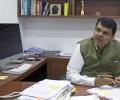
Maharashtra Chief Minister Devendra Fadnavis announced the state's ambition to become India's leader in quantum technology. The state plans to build a robust ecosystem, align with the National Quantum Mission, and train over 5,000 professionals, recognising AI, semiconductors, and quantum tech as key pillars for future growth and global competitiveness.

GMR Aero Technic has signed a license agreement with Honeywell Aerospace to provide maintenance, repair, and overhaul (MRO) services for LEAP engine line replaceable units (LRUs). This partnership will enhance MRO capabilities for Airbus A320neo and Boeing 737 MAX aircraft in India, leveraging Honeywell's technology and GMR's infrastructure to offer efficient and cost-effective solutions for regional airlines.
Karnataka Power Transmission Corporation Limited (KPTCL) has successfully deployed advanced drone technology for inspecting high voltage transmission corridors, leading to an 85 per cent reduction in power outages. This initiative has improved operational efficiency, workforce safety, and enabled precise fault detection and predictive maintenance across over 11,000 transmission towers and 3,370 km of lines.
